Mob Feeders Can Do the Job
You might say mob feeders were the original calf auto-feeders—long before auto-feeders were ever even thought of.
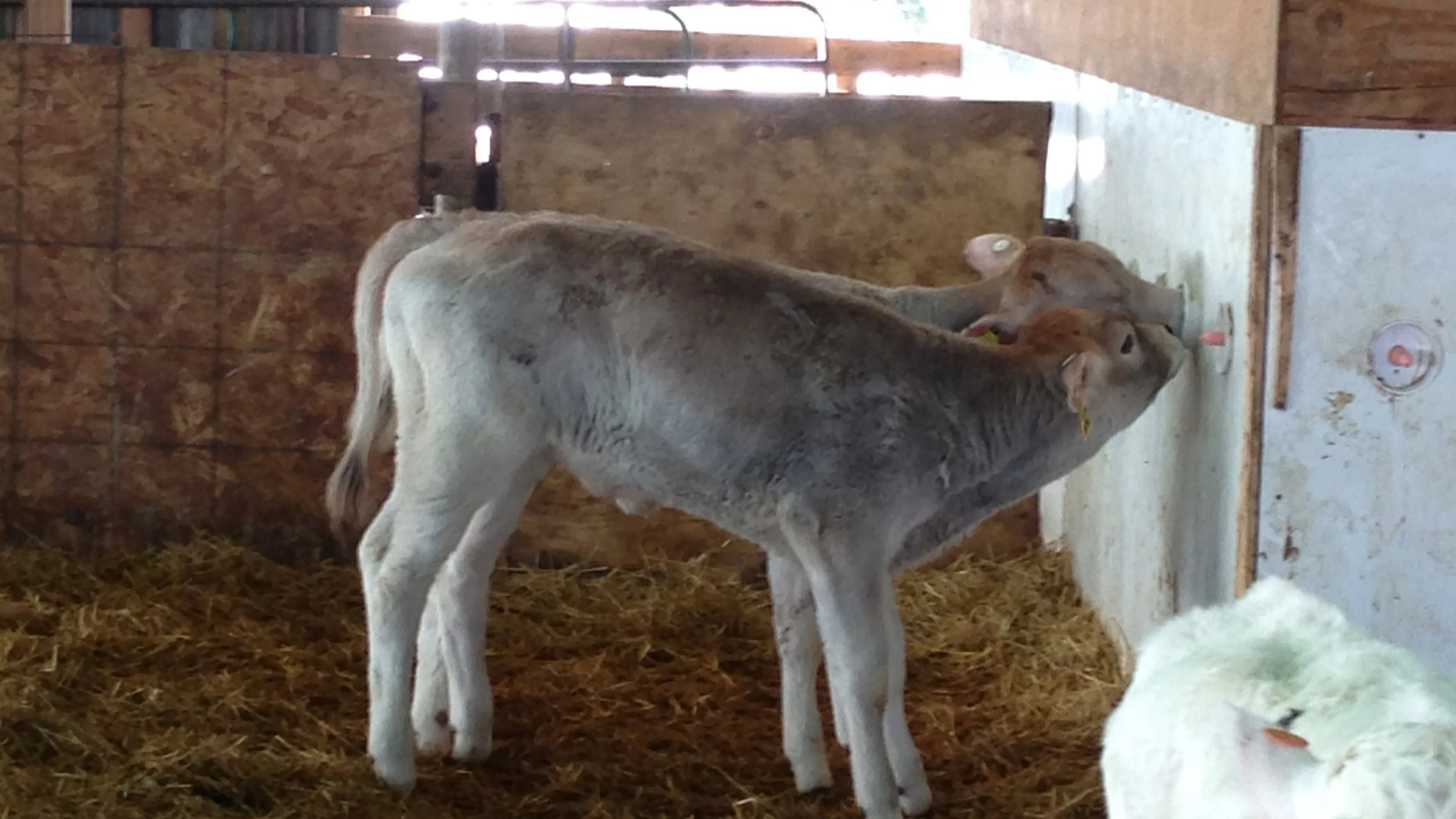
Like auto feeders, mob feeders allow calves to consume milk when they are hungry and have the desire to nurse. This more closely mimics natural nursing behavior than traditional bottle or pail-feeding systems. Mob feeders also offer several distinct advantages:
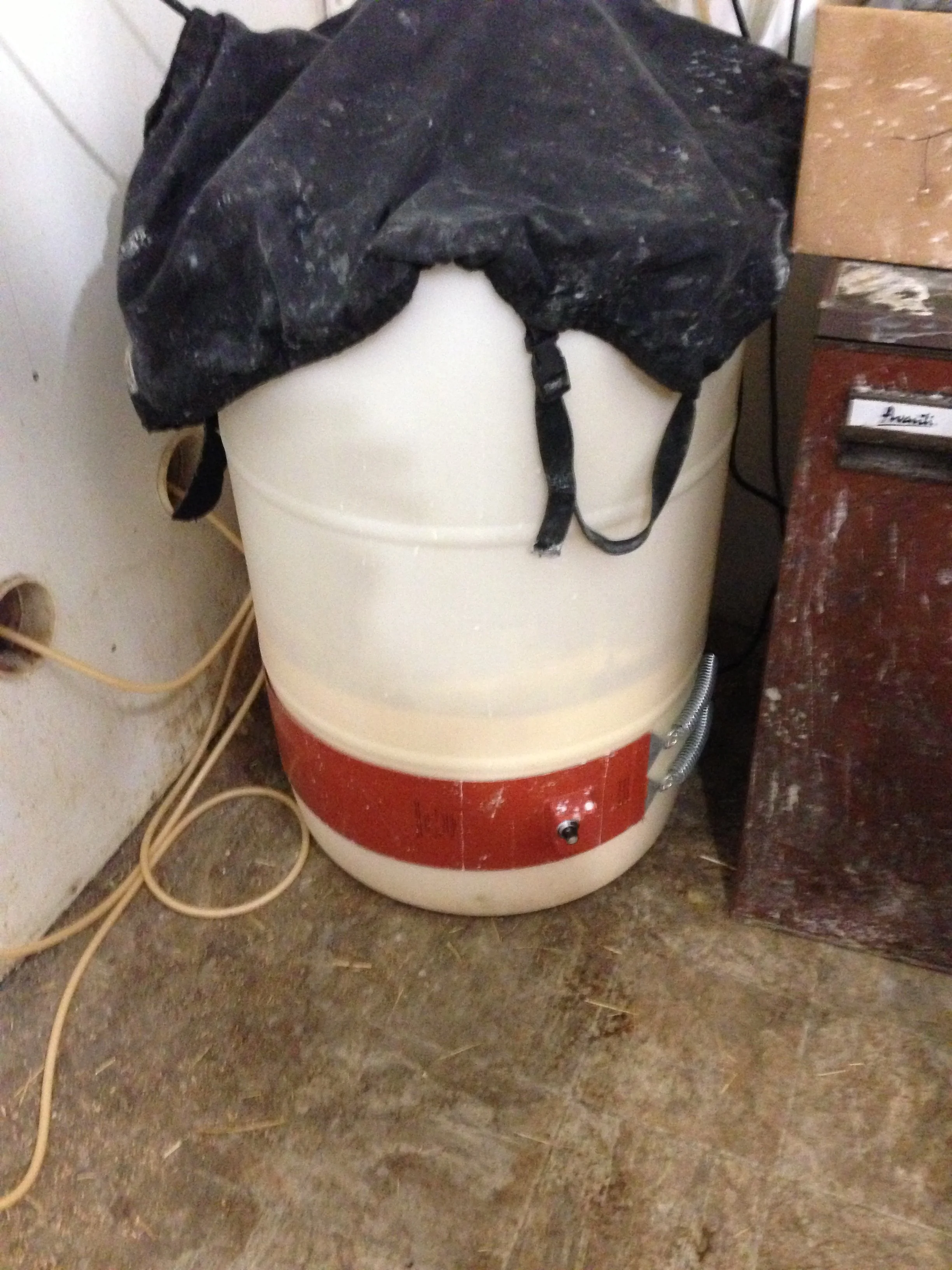
1. Low equipment investment – A mob feeder can be assembled at a fraction of the cost of auto-feeders. All that is needed is a vessel to hold the milk, an agitator to keep the milk mixed, suction lines equipped with foot valves attached to nipples, and a way to keep the milk warm, either in a heated milk room or with a heat tape attached to the vessel. Some farms use something as simple and inexpensive as repurposed 55-gallon barrels, while others have gone so far as to retrofit small bulk tanks, which provide the sanitary benefits of stainless steel along with easier cleaning. The relatively low equipment cost can free up more of the calf-raising budget for the volume and quality of milk replacer being fed.
2. Easy calf training – Calves tend to catch onto mob feeders quickly because they can mimic the behavior of other calves in the pen. Unlike auto-feeders, mob feeders don't require calves to walk into a chute or put their heads into a confined space to find the nipples.
3. Calf performance – The unrestricted intake that mob feeders provide can support excellent growth rates. Average daily gains of well over 2 pounds per calf per day are achievable on farms that have fine-tuned their mob-feeding management programs.
Those gains can be hard-won, however. Keeping calves healthy and growing on a mob feeder requires close attention to detail, including:
Individual calf observation is critical. Calves need to be observed regularly by trained personnel who can identify problems early and provide additional care when needed. Daily observation is especially important because individual milk consumption can’t be measured with a mob feeder.
Calves that are thriving may consume 8 quarts or more of liquid ration per day. But a calf that is beginning to get sick will rapidly fall off in milk consumption. If that calf isn't identified quickly, dehydration and inadequate nutrient intake can follow.
Sanitation is another key consideration. Warm milk and/or milk replacer sitting in a warm vessel creates a great environment for bacteria to grow and thrive. To combat this, acidification of the liquid ration is recommended. Acidification works to slow the growth of harmful bacteria by creating an environment that is not suitable for their reproduction. Citric and malic are two FDA-approved acids that can be used to acidify whole milk or milk replacers.
Acidification can help control bacterial growth, but it doesn't replace a good sanitation program. Mob feeders and calf nipples should be cleaned regularly with dairy-grade detergents and acids. Replacing the plastic suction lines on a regular basis can also be a simple, affordable way to maintain sanitation rather than trying to clean tubing that has been in service for an extended period.
Mob feeders can also simplify the weaning transition. To help ease the change from a liquid to a dry feed during the weaning period, the concentration of the liquid ration can be gradually reduced as calves increase their solid-feed intake. For example, the ration could be diluted with water to achieve 75% strength at 7 to 8 weeks of age, then reduced weekly in additional 25% increments until calves are consuming only water through the mob feeder.
Many of the same pen-management principles used with auto-feeders also apply to mob feeders. Calves should have at least 40 square feet of resting space per head, and bedding should be changed regularly to maintain comfort, sanitation, and air quality.
Similar to other group-housed situations, mob feeders are often installed in retrofitted barns. These facilities may benefit from improvements such as ventilation chimneys to promote air exchange, which helps maintain air quality and overall calf comfort.
One of the most common objections we hear about mob feeding is that calves consume a lot of milk replacer through them. But that's also the point. Dairy producers who embrace intensive calf-feeding programs understand that they are making an investment today that will result in a better, more productive animal in the future.
To those managers, the investment in a higher plane of nutrition, coupled with low equipment overhead costs, makes perfect sense as they develop their future milking herd.
RECENT POSTS